
Roof ventilation guide · Solar Whiz
Solar powered roof ventilation for homes
An unventilated roof cavity stores heat all afternoon and radiates it down through your ceiling well after sunset. A solar roof ventilator runs off its own PV panel to pull that air out — no wiring, no meter, no running cost. The catch is replacement air, and most disappointing installs come down to exactly that.
How it works
The Solar Whiz roof ventilators and exhaust fan prevent heat build-up in your roof cavity or attic space and reduce the heat load on your ceiling. This prevents heat from radiating down into your living space. This results in lower roof space temperatures as well as lower internal temperatures. Replacement air is the key to the Solar Whiz functionality and must be available for the unit to effectively remove heat or moisture. Replacement air is most commonly accessed via eave vents or ceiling vents. Heat or moisture may also be extracted directly via ducting. Three configurations are described: (1) standard roof ventilation installation with eave vents, (2) heat removal from the interior via ceiling vents, (3) direct heat extraction and removal via ducts.
Source: Solar Whiz ↗
Animations by Solar Whiz, re-encoded for fast loading. Nothing plays until you press it.
Pros
- Runs entirely on solar with no running costs and no electricity bills; suitable for sheds where there is no electricity available. Solar Whiz ↗
- Australian made - designed, built and tested at a factory in Melbourne, Victoria. Solar Whiz ↗
- Stainless steel construction with an aluminium fan cap, described as extremely durable and lightweight; competitors are said to use mild powder-coated steel or plastic. Solar Whiz ↗
- SS316 units available for coastal or other corrosive environments. Solar Whiz ↗
- Bushfire-rated units available, designed to comply with regulations for buildings in bushfire-prone areas. Solar Whiz ↗
- DIY-friendly and can usually be installed by any competent handyman with the right tools. No electrician required for the base unit. Solar Whiz ↗
- Safe low voltage installation; tiltable solar panel to optimise the angle to the sun. Solar Whiz ↗
- Can be installed on any type of roof including tile, zincalume and colorbond. Solar Whiz ↗
- Thermostat, hygrostat and night operation accessories available for control over when the unit runs. Solar Whiz ↗
- Airflow figures are stated as RAF (Real Air Flow), tested with all components attached, rather than theoretical capacity. Solar Whiz ↗
Cons and limits
Stated by the manufacturers themselves. Worth reading before you buy — most ventilation disappointments come from one of these.
- Replacement air must be available for the unit to work; without eave vents or other air intake a roof ventilator will struggle to extract air - it would be trying to pull air out of a vacuum. Solar Whiz ↗
- Galvanised eave vents are not suitable for installation in coastal or other highly corrosive environments; replacement air must be sourced elsewhere. Solar Whiz ↗
- Low-light conditions reduce the capacity at which the unit can ventilate. Full capacity in low light or at night requires the extra-cost Night Operations Kit. Solar Whiz ↗
- Runs whenever there is active sunlight, including in winter, unless a thermostat is fitted to stop it. Solar Whiz ↗
- Roofs too steep for conventional roof mounting require gable/wall-mounted units instead. Solar Whiz ↗
- Cathedral-style roofing requires extension collars so the unit does not protrude into the ceiling space. Solar Whiz ↗
- Flat or lower pitch roofing needs more eave vents to maximise air replacement and evenly distribute airflow. Solar Whiz ↗
- Subfloor: requires 500mm+ clearance to fit the Solar Whiz wall-mounted fan, otherwise an inline fan must be used instead. Solar Whiz ↗
- Commercial unit is rated at <73dBA, notably louder than the residential units. Solar Whiz ↗
- Components warranty is 2 years; only the PV panels carry the 10-year term. Solar Whiz ↗
What you'll need
- Adequate replacement air - eave vents, ceiling vents, or existing passive vents. Commercial sites without vents can use partly open windows, roller doors or emergency exit doors while the units run. Solar Whiz ↗
- Roof pitch assessment: steep roofs need gable fans, cathedral ceilings need extension collars, flat/low pitch needs additional eave vents. Solar Whiz ↗
- For Night Operations Kit: a 24-volt power supply connected to a power point in the roof space, installed with the help of an electrician. Solar Whiz ↗
- Subfloor: 500mm+ clearance for a wall/gable mounted fan; otherwise a 25 Watt 320mm diameter inline fan is used. Solar Whiz ↗
- Purchase is via the GES dealer network across Australia, or direct from GES. Solar Whiz ↗
- Commercial sizing requires the facility volume (length x width x height) multiplied by the recommended air changes per hour for the building type. Solar Whiz ↗
Expected results
Every figure below is a manufacturer claim, reproduced as published and linked to its source. Airdry has not independently tested these. Actual results vary with roof area, orientation, insulation, climate zone and available replacement air.
| Claim | Figure | Source |
|---|---|---|
| Heat entering the home through the ceiling | 25% to 35% of heat leaking into your home through your ceiling | Solar Whiz ↗ |
| Summer roof temperature | Temperatures on your roof easily reach as high as 70C in Summer | Solar Whiz ↗ |
| Summer roof temperature (homepage wording) | Roof temperatures can easily reach temperatures of over 60C on a hot, sunny day | Solar Whiz ↗ |
| Minimum airflow for a noticeable effect | A small roof space usually needs 700 m3/h of air movement to have a noticeable effect | Solar Whiz ↗ |
| Brushless DC motor efficiency | efficiency levels of 80-95% | Solar Whiz ↗ |
| Night Operations Kit power draw | It's highly unlikely that it would require more than 24 watts | Solar Whiz ↗ |
| Air conditioning savings | potentially saving you hundreds of dollars on cooling costs if you're using air conditioning (no figure substantiated) | Solar Whiz ↗ |
| Recommended commercial air changes | 3-5 air changes per hour recommended for a factory; even having 1-2 air changes would make a difference | Solar Whiz ↗ |
Published specifications
| Model | Airflow | Power | Noise | Coverage | Warranty | |
|---|---|---|---|---|---|---|
| SW-AU-R-28Roof-mounted solar roof ventilator (residential) | 1700 m³/h | 28 Watt PV panel; solar, no mains required. Night operation available with Constant Current Module add-on. | <45 dBA (measured at 1 metre) | 180 | PV panels 10 years; other components 2 years | ↗ |
| SW-AU-R-40Roof-mounted solar roof ventilator (residential, largest domestic unit) | 2300 m³/h | 40 Watt PV panel; solar, no mains required. Night operation available with Constant Current Module add-on. | <60 dBA (measured at 1 metre) | 250 | PV panels 10 years; other components 2 years | ↗ |
| SW-AU-W-L-28Wall mounted with louvre | 2000 m³/h | Solar, 28W PV | not published | — | — | ↗ |
| SW-AU-W-L-40Wall mounted with louvre | 2500 m³/h | Solar, 40W PV | not published | — | — | ↗ |
| SW-RAF-G-2100Gable-mounted solar fan | 2100 m³/h | Solar | not published | — | — | ↗ |
| SUB1200330mm inline fan with 300mm adaptor (no PV) | 1200 m³/h | Mains / optional | not published | — | — | ↗ |
| SW-IF-1212C150mm inline fan with 2 flanges | 425 m³/h | Mains / optional | not published | — | — | ↗ |
| SW-IF-2412C150mm inline fan with 2 flanges | 425 m³/h | Mains / optional | not published | — | — | ↗ |
| SWW-368-15RAF-1600 Wall - 840mA | 1000 m³/h | Solar, 15W PV | not published | — | — | ↗ |
| SWW-368-20RAF-2500 Wall - 1040mA | 1200 m³/h | Solar, 20W PV | not published | — | — | ↗ |
| SWW-368-40RAF-4000 Wall - 1320mA | 2100 m³/h | Solar, 40W PV | not published | — | — | ↗ |
| ELEC124DNight Operations Kit (N-OPS / Constant Current Module) | not published | Constant Current Module plus 24V 3A power supply. Runs from a 24-volt power supply connected to a power point in the roof space; can be installed with the help of an electrician. | not published | — | — | ↗ |
| SW1112Adjustable Thermostat | not published | 12-240V | not published | — | — | ↗ |
Frequently asked questions
What size Solar Whiz do I need?
Solar Whiz unit has a recommendation on what size homes they ventilate best. The recommendations for ventilating standard pitched homes are as follows and are based on our experience in the Australian roof ventilation market since 2010: 1. The SW-AU-R-28 - Suitable for spaces up to 180m2. 2. The SW-AU-R-40 - Suitable for spaces up and above 250m2. Many of our competitors recommend less capacity. Theoretically, these lower airflow capacity requirements are correct but don't actually result in the desired outcome - because of severe restrictions for the necessary replacement air. At GES we also carry out our own testing, whilst it appears that our competitors rely on the manufacturer's specifications.
Source: Solar Whiz ↗
How many litres per second can a RAF unit move?
SW-AU-R-28: 1700 m3/h / 472.22 L/s. SW-AU-R-40: 2300 m3/h / 638.89 L/s. SW-AU-C-155: 10000 m3/h / 2777.78 L/s.
Source: Solar Whiz ↗
Can you over-ventilate your roof space?
The short answer is no - you can't over-ventilate your roof space. The long answer is that there's no limit to how much airflow you can have in your roof space. Provided you have enough roof ventilation airflow, you'll be continuously replacing the warm air in your roof space, flushing it out with cool replacement air. You can definitely under-ventilate, however, we will advise you of the best possible solution to get you the results you need.
Source: Solar Whiz ↗
Why are eave vents important?
Eave vents are important because they provide the coolest replacement air. Replacement air is dragged in by the Solar Whiz unit to replace the hot air that is being extracted. This is an important principle for flushing out trapped air responsible for 25% to 35% of the heat in your home. Without eave vents or other forms of air intake, a roof ventilator unit will struggle to extract air. It would be trying to pull air out of a vacuum. Please note: galvanised eave vents are not suitable for installation in coastal or other highly corrosive environments. In these cases you will need to source replacement air from somewhere else.
Source: Solar Whiz ↗
Why are ceiling vents important?
Ceiling vents are interior vents that go into the ceiling of a room and connect directly to the above roof space. They are ideal for double-story homes where the heat can accumulate in second-story rooms as well as in roof space. Heat naturally rises and can radiate outwards in confined spaces. A ceiling vent allows a roof-mounted Solar Whiz to pull fresh air through the home, and flush the heat out of your second story AND roof space.
Source: Solar Whiz ↗
How noisy is the fan of the Solar Whiz ventilators?
The Solar Whiz units all operate below 60 decibels at one metre. The measurements for each roof ventilator are as follows: SW-AU-R-28 - <45 Decibels (dBA). SW-AU-R-40 - <60 Decibels (dBA). These measurements are taken from one metre away. In reality, your unit will be located on your roof; far more than one metre away and likely separated by walls and ceiling!
Source: Solar Whiz ↗
What are the Solar Whiz gable units for?
The Solar Whiz Gable units are ideal for homes with pitched roofs that are too steep to conventionally install a Solar Whiz, or if a customer wishes a minimalist look for their roof. We also offer a range of louvre-mounted fans. SW-AU-W-28 - Airflow capacity of 2,000m3/h. SW-AU-W-40 - Airflow capacity of 2,500m3/h. SW-RAF-G-2100 - Airflow capacity of 2,100m3/h. Alternatively, the gable units make for powerful sub-floor ventilation fans.
Source: Solar Whiz ↗
Can the Solar Whiz ventilators be used at night?
Solar Whiz ventilators can be paired with a Night Operations Kit. This system (also referred to as a constant current module or simply, NOPs) uses mains power to top up the remaining power needed to run a unit at full power. In low levels of sunlight the NOP system will only draw the energy needed to keep your unit operating at full capacity. Once the sun has set the NOP can power the unit completely, using minimal energy. It's highly unlikely that it would require more than 24 watts. NOPs run from a 24-volt power supply connected to a power point in your roof space. This can be installed with the help of an electrician.
Source: Solar Whiz ↗
Does the Solar Whiz turn off in winter? Can I install a thermostat?
The Solar Whiz runs whenever there is active sunlight reaching the solar panel. This means that yes, the Solar Whiz will run in winter. Solar Whiz offers both a Fixed Temperature Thermostat, and an Adjustable Temperature Thermostat. The Fixed Temperature Thermostat will prevent a unit from operating unless it is 30C degrees or more inside the space where the thermostat is installed. The Adjustable Temperature Thermostat allows the user to set the temperature at which the unit runs.
Source: Solar Whiz ↗
How do I prevent heat from escaping throughout winter, even after installing a thermostat?
The percentage of heat that is lost through the ventilator itself is very minimal. You are far more likely to have heat radiate out through your metal, or tiled roof if it's uninsulated. Your best solution is to make sure you have good insulation in your home. While the thermostats ensure that the unit runs only when you need it to, Solar Whiz ceiling vents are designed to be able to close. They have internal butterfly-style flaps that can be made to shut. If you still have concerns about heat escaping through the Solar Whiz unit itself, there are some DIY solutions. Cutting out a piece of foam that can be manually inserted into the throat of the unit to prevent heat from escaping through the ventilator is an option.
Source: Solar Whiz ↗
How difficult is it to install a Solar Whiz?
Solar Whiz units are DIY-friendly and can usually be installed by any competent handyman with the right tools. We strongly recommend that one of our authorised installers handle the installation for you. This will make sure that you get the best possible results according to our installation principles. However, we are happy to assist you with advice should you decide to do it yourself.
Source: Solar Whiz ↗
How does roof line design affect a ventilation system?
Every home is different, but Solar Whiz has taken strides to offer accessories that cater to different styles or pitches of roofing. For steep roofs, we use gable fans so that units don't have to be installed at a steep angle. This makes the installation much easier and removes the risk of water ingress. For cathedral-style roofing, we offer extension collars for the units. This ensures that the units are installed without protruding into the ceiling space. For flat or lower pitch roofing, we recommend installing more eave vents to maximise air replacement and evenly distribute airflow.
Source: Solar Whiz ↗
What if I have a cathedral ceiling or flat roof?
If you're looking to use Solar Whiz to ventilate your home rather than your roof space, we can help. For limited roof space access, we install butterfly-style vents that can be open and closed as needed.
Source: Solar Whiz ↗
How are the gable fans installed?
Instead of installing a unit on the roof itself, gable fans are installed vertically at the top of the wall that connects to your roof space. This allows for direct replacement air crossflow and maximises ventilation results. Gable units are used in situations where the roof slope might be too steep or a customer prefers the aesthetic appearance of a gable fan.
Source: Solar Whiz ↗
Can I install Solar Whiz ventilators on my shed/workshop etc.?
Solar Whiz can be installed in all kinds of small spaces, such as: Granny flats, Studio flats, Garages, Workshops, Trailers, Cabins, Sheds. These small-yet-powerful units are perfect for tin or metal sheds that can accumulate large amounts of heat very quickly in the summer.
Source: Solar Whiz ↗
What are your product warranties?
A Solar Whiz warranty offers a substantial timeframe to cover our products & components. Warranties for our products is as follows: Solar Whiz PV Panels - 10 year warranty. Solar Whiz Components - 2 year warranty.
Source: Solar Whiz ↗
Where are Solar Whiz products produced?
Solar Whiz is designed, developed and manufactured in Australia by Global Eco & Environmental Solutions (GES Pty Ltd).
Source: Solar Whiz ↗
In stock at Airdry
Residential solar ventilation products

SW AU 40 BF BUSH FIRE RATED Australian Standards of BAL up to 40.
$1,069.99
SW AU 40 RAF Roof Unit
$990.00
SW AU BF 28 Bushfire Rated
$849.99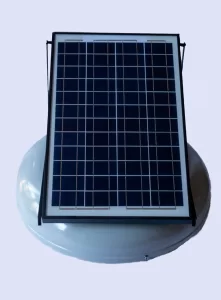
SW AU 28 RAF Roof Unit
$829.99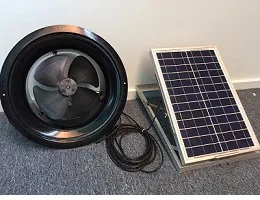
SW2100 RAF Gable unit
$825.00Sources and citations
Every technical claim on this page comes from the manufacturer's own published material, extracted 2026-08-12. Airdry (Solair Pty Ltd) is an official Australian distributor for these brands. Where the manufacturer's figures conflict across their own pages, we've said so above rather than choosing one silently.
- https://www.solarwhiz.com.au/
- https://www.solarwhiz.com.au/home-ventilation/products/
- https://www.solarwhiz.com.au/news-information/residential-faqs/
- https://www.solarwhiz.com.au/sub-floor-ventilation-fans/
- https://www.solarwhiz.com.au/news-information/commercial-faqs/
No pricing is published by any manufacturer; all prices on this site are Airdry's own and include GST.